What Is Deliverance Ministry? Understanding Biblical Deliverance and Spiritual Freedom
Discover what deliverance ministry means, whether biblical deliverance is supported by Scripture, what to expect from deliverance prayer, and how spiritual freedom connects with Christian discipleship.
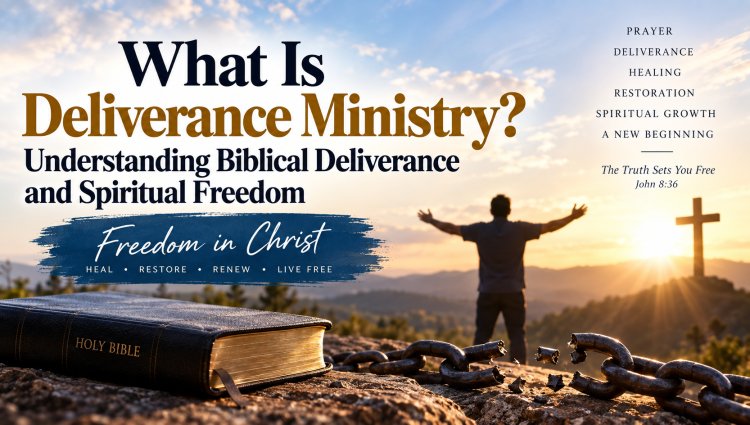
The Christian faith speaks often about freedom, restoration, prayer, repentance, and the victory believers have through Jesus Christ. One ministry that focuses specifically on these themes is deliverance ministry.
For someone unfamiliar with the subject, the term can raise many questions. What does deliverance mean in Christianity? Is deliverance ministry biblical? What happens during deliverance prayer? Is deliverance only associated with demonic oppression, or does it involve a broader journey of spiritual freedom?
In simple terms, deliverance ministry is a Christian ministry focused on helping people seek freedom from spiritual bondage and oppression through faith in Jesus Christ, prayer, repentance, Scripture, and the work of the Holy Spirit.
The subject should be approached carefully, prayerfully, and with a strong foundation in Scripture. At All Nations Church of God, faith, prayer, spiritual growth, worship, fellowship, and service are central parts of the church's identity and ministry. Learn more about All Nations Church of God.
Quick Answer
Deliverance ministry is a form of Christian ministry that seeks to help people experience freedom from spiritual oppression and bondage through Jesus Christ.
Biblical deliverance is ultimately about God's power rather than the ability of a particular minister. The New Testament records Jesus freeing people from demonic oppression, while the broader Christian message emphasizes repentance, faith, prayer, discipleship, and a transformed life.
Deliverance should therefore not be viewed simply as a dramatic event. Spiritual freedom is connected with continuing to follow Christ, grow in God's Word, pray consistently, and remain connected to a healthy Christian community.
What Is Deliverance Ministry?
Deliverance ministry focuses on prayer and spiritual care for people who believe they are experiencing spiritual oppression, bondage, or other difficulties that they understand through a Christian spiritual framework.
The Bible contains several accounts of Jesus confronting evil spirits and freeing people from oppression. For example, Mark 5 describes Jesus delivering a man who had been tormented by an unclean spirit. Other passages, including Luke 4:33-36 and Acts 16:16-18, also describe encounters involving spiritual oppression.
However, biblical deliverance should not be reduced to casting out demons. Christian spiritual growth also involves turning away from sin, receiving God's grace, forgiving others, renewing the mind, learning Scripture, and developing a daily relationship with God.
This broader understanding helps keep the focus where Christians believe it belongs: on Jesus Christ.
Is Deliverance Ministry Biblical?
Jesus Demonstrated Deliverance
The Gospels record multiple occasions when Jesus confronted demonic oppression and brought freedom to individuals. His ministry included preaching, teaching, healing, prayer, compassion, and deliverance.
Matthew 4:24, for example, describes people bringing those who were suffering from various conditions, including those oppressed by demons, to Jesus.
These accounts form an important biblical foundation for Christians who believe in deliverance ministry.
The Early Church Continued Ministry
The Book of Acts also contains accounts of spiritual deliverance. In Acts 16:16-18, Paul encounters a slave girl described as having a spirit of divination and commands the spirit to leave in the name of Jesus Christ.
These passages are part of the biblical record that Christian deliverance ministries use when explaining their purpose.
At the same time, Christians interpret these passages in different ways and may differ regarding how deliverance ministry should be practiced today. A responsible approach keeps Scripture at the center and avoids sensationalism.
Spiritual Warfare Requires Spiritual Discernment
Ephesians 6:12 reminds Christians that their struggle is not simply against human beings but involves spiritual forces. The passage goes on to emphasize the “armor of God,” including truth, righteousness, faith, salvation, and the Word of God.
This is important because biblical spiritual warfare is not about fear. It is about standing firmly in faith and trusting God.
Benefits and Purpose of Deliverance Ministry
When understood within a broader Christian discipleship journey, deliverance ministry may address several areas of spiritual life.
Freedom From Spiritual Bondage
People may seek prayer because they feel spiritually trapped, oppressed, or unable to move forward in their relationship with God. Deliverance prayer can provide an opportunity to seek God's help and recommit one's life to Christ.
A Deeper Prayer Life
Deliverance ministry places a strong emphasis on prayer. Prayer is not simply a response to problems; it is a way Christians communicate with God, seek His guidance, confess their needs, and express trust.
All Nations Church of God emphasizes prayer as an important part of its ministry and invites people who are facing difficult circumstances to seek prayer and spiritual support. Explore the church's prayer and ministry services.
Spiritual Growth
Freedom is not simply about leaving something behind. It is also about growing into a healthier and more committed relationship with God.
Reading Scripture, praying, worshiping, serving others, and participating in Christian fellowship can help believers continue developing their faith.
Hope and Restoration
People who feel burdened by their past may find encouragement in the Christian message of forgiveness and restoration. The Bible repeatedly points believers toward God's mercy and the possibility of a renewed life in Christ.
What to Expect From Deliverance Ministry
There is no single universal format for a deliverance ministry session. Practices can vary between churches and Christian traditions. However, a biblically focused approach may involve several important steps.
Step 1: Prayer and Spiritual Preparation
A session may begin with prayer, worship, and a conversation about the person's concerns. The purpose is to place the situation before God rather than creating fear or dependence on a particular individual.
The person may also be encouraged to examine areas of their life where repentance, forgiveness, or renewed commitment to Christ may be needed.
Step 2: Identifying Areas of Spiritual Struggle
The conversation may explore recurring spiritual struggles, destructive patterns, unforgiveness, involvement in practices that conflict with Christian teaching, or other concerns.
This step should be handled with compassion and discernment. Not every personal difficulty should automatically be interpreted as demonic activity.
Step 3: Prayer for Freedom and Renewal
Prayer may include repentance, renunciation of practices or beliefs that conflict with Christian faith, asking God for protection, and praying in the name of Jesus Christ.
The emphasis should remain on God's authority and grace.
Step 4: Continued Discipleship
Deliverance should not be treated as the end of someone's spiritual journey. Continued Bible reading, prayer, worship, fellowship, and discipleship are important parts of Christian growth.
The idea is simple: freedom should be followed by a life increasingly centered on Christ.
Deliverance Ministry in a Healthy Christian Community
Spiritual growth rarely happens in isolation. Christian community gives believers opportunities to worship together, study Scripture, receive encouragement, pray with others, and serve their neighbors.
All Nations Church of God describes itself as a Christ-centered community committed to worship, prayer, spiritual growth, fellowship, discipleship, and serving people in the community and beyond. Discover more about the church's mission and identity.
The church also highlights community and world outreach as part of its services. Explore All Nations Church of God's services.
For Christians seeking freedom, this kind of community can provide ongoing encouragement rather than treating deliverance as a one-time experience.
Why Choose a Biblical Approach to Deliverance Ministry?
A biblical approach keeps Jesus Christ at the center.
Rather than focusing on fear, dramatic experiences, or the personality of a particular minister, biblical deliverance emphasizes Scripture, prayer, faith, repentance, forgiveness, and dependence on God.
A healthy ministry should also treat people with dignity and compassion. Spiritual concerns can sometimes exist alongside emotional, psychological, physical, or relational difficulties. Seeking appropriate professional support when necessary does not conflict with Christian faith.
Deliverance ministry should never encourage someone to abandon necessary medical or mental-health care, nor should every symptom or struggle automatically be attributed to a spiritual cause.
The goal should be whole-person care grounded in Christian faith and wise discernment.
Frequently Asked Questions
What does deliverance ministry mean?
Deliverance ministry refers to Christian prayer and ministry focused on helping people seek freedom from spiritual oppression or bondage through Jesus Christ. It is generally understood within the larger context of prayer, repentance, Scripture, discipleship, and spiritual growth.
Is deliverance ministry found in the Bible?
The Bible contains accounts of Jesus and His followers confronting demonic oppression and bringing freedom to individuals. Examples can be found in the Gospels and the Book of Acts, including Mark 5 and Acts 16.
Does every Christian need deliverance ministry?
Not necessarily. Christians have different spiritual experiences and understandings of deliverance. Prayer, Scripture, discipleship, and fellowship are central practices for Christian growth, while specialized deliverance ministry may be sought by people who believe they are experiencing particular forms of spiritual oppression.
What happens during a deliverance prayer session?
Practices vary. A session may include prayer, Scripture, repentance, forgiveness, discussion of spiritual struggles, and prayer for freedom in Jesus' name. A responsible ministry should approach people with compassion, wisdom, and respect.
How can I continue growing after deliverance?
Continue building your relationship with God through prayer, Bible reading, worship, Christian fellowship, service, and discipleship. Spiritual freedom is best understood as part of an ongoing walk with Christ rather than simply a single event.
Conclusion + CTA
Deliverance ministry is ultimately about seeking freedom, restoration, and spiritual renewal through Jesus Christ. The Bible contains clear accounts of Jesus confronting spiritual oppression, while the wider Christian message calls believers to live through faith, prayer, repentance, Scripture, and discipleship.
Understanding deliverance requires more than focusing on spiritual warfare. It requires keeping Christ at the center and remembering that Christian freedom is connected with an ongoing relationship with God.
If you are searching for prayer, spiritual encouragement, Christian fellowship, or opportunities to grow in your faith, All Nations Church of God provides a Christ-centered community focused on worship, prayer, discipleship, and service.
You can visit the All Nations Church of God blog for additional faith-based resources, or contact the church if you would like to learn more about its ministries and opportunities for spiritual connection.
Contact All Nations Church of God
All Nations Church of God
Phone: 703-453-2133
Email: support@allnationschurchofgod.org
Address: P. O. Box 3526, Manassas, VA, United States, Virginia
Website: https://www.allnationschurchofgod.org/
Contact: Contact All Nations Church of God
What's Your Reaction?